

What Is an Amenity Building?
An amenity building is a dedicated structure — or a section of a larger development — designed to house shared facilities that go beyond basic shelter. Think fitness centers, co-working lounges, rooftop terraces, pet spas, dining areas, and social gathering spaces, all under one roof.
Here's a quick breakdown of what sets amenity buildings apart:
- Purpose: Enhances the daily experience of residents, employees, or campus users through shared lifestyle spaces
- Common features: Fitness studios, co-working areas, outdoor dining, event spaces, package rooms, and pet facilities
- Where you find them: Luxury residential buildings, corporate campuses, life sciences parks, mixed-use developments, and public parks
- Who benefits: Residents and tenants who want more than four walls — they want a community
The idea is simple but powerful. A standard building gives you a place to sleep or work. An amenity building gives you a reason to stay.
Research consistently shows that residents tie their living space to their identity — in fact, 60% of people say where they live reflects who they are. That's a significant shift in how people think about home. It's no longer just square footage and a lease. It's a lifestyle statement.
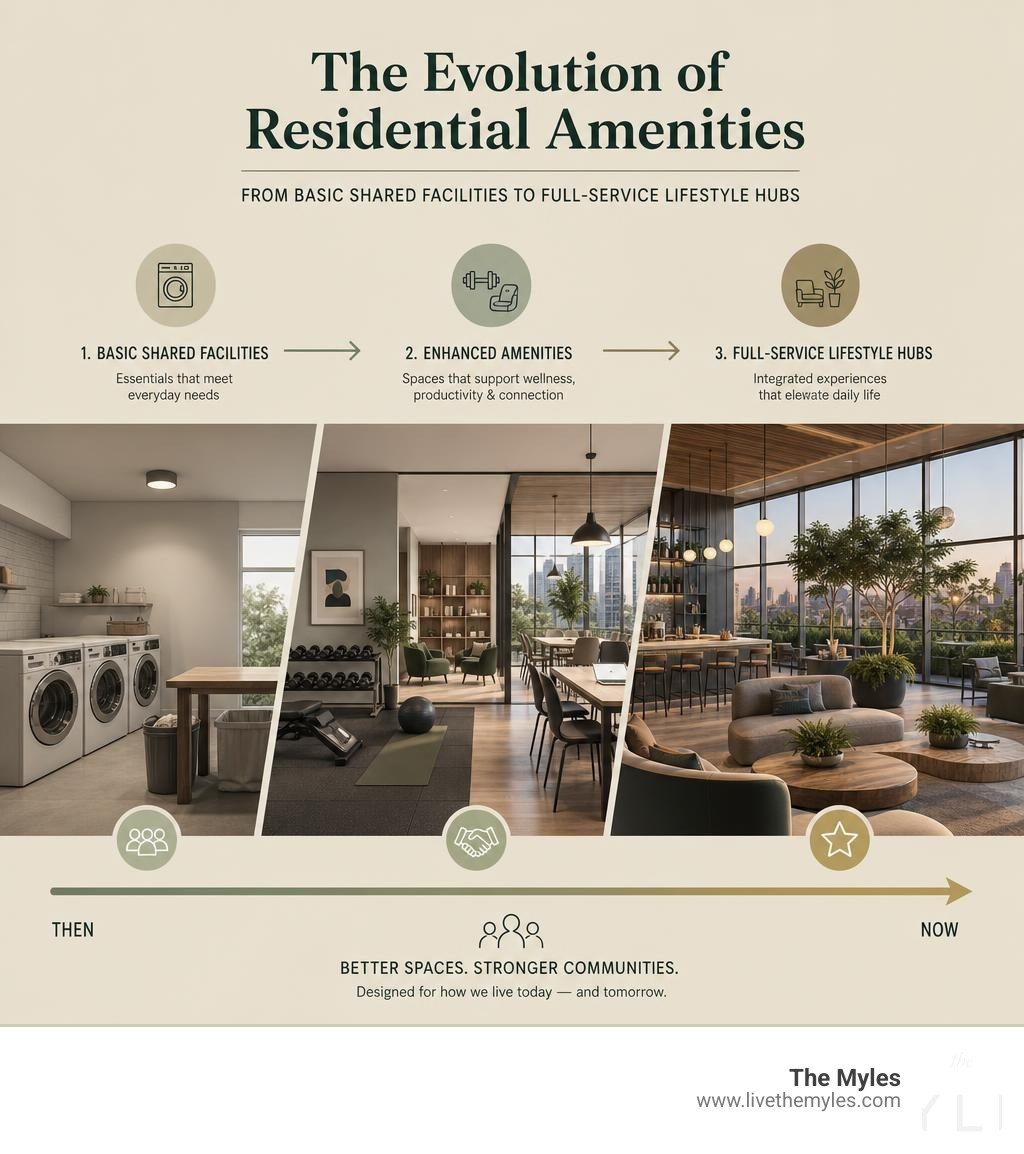
Modern amenity buildings have evolved from basic shared laundry rooms into fully realized community hubs — places with skylit atriums, food halls, wellness centers, and flexible spaces that adapt to how people actually live and work today.
Whether you're exploring a luxury residential tower, a biotech campus, or a mixed-use urban development, understanding what makes an amenity building work is the first step to finding a home that truly fits your life.
Understanding the Modern Amenity Building
To fully appreciate the value of a dedicated amenity building, we must look at how it transforms a physical address into an active community hub. Historically, residential complexes offered little more than an entryway and a parking lot. Today, the demand for lifestyle integration and personal expression has completely changed the landscape of modern real estate.
An amenity-focused development functions as the heart of a neighborhood. It is designed to accommodate the fluid boundaries of modern life, where working, socializing, exercising, and relaxing happen seamlessly within the same ecosystem. By creating spaces that foster organic social connections, these developments allow us to express our personal identity through our choice of home.
| Feature / Attribute | Standard Residential Buildings | Amenity-Focused Developments |
|---|---|---|
| Primary Focus | Basic utility, shelter, and private square footage | Holistic lifestyle, convenience, and community |
| Shared Spaces | Minimal (lobby, basic hallways, standard mailroom) | Extensive (co-working lounges, fitness studios, sky decks) |
| Social Environment | Isolated; residents rarely interact in shared zones | Collaborative; designed to spark resident connection |
| Technology Integration | Standard physical keys and manual package systems | Smart access control, video intercoms, automated package rooms |
| Wellness Offerings | None or a small, unstaffed exercise room | Dedicated fitness centers, pet spas, and outdoor green spaces |
How an Amenity Building Differs from Standard Developments
Standard developments treat shared areas as secondary considerations. In contrast, an amenity building elevates these spaces to the main event. It prioritizes daily convenience, physical and mental wellness, and opportunities for social connection.
This difference is so pronounced that global mapping and real estate databases have established strict, standardized schemas to classify these structures. For instance, geographic databases utilize the Key:amenity - OpenStreetMap Wiki standard to categorize useful and important facilities for visitors and residents. Similarly, real estate systems rely on standardized data dictionaries like the Amenities - Building - RESO Data Dictionary to list and verify features such as bike storage, business lounges, and swimming pools.
Even indoor mapping technology uses precise specifications, such as the Amenity - Indoor Mapping Data Format (1.0.0), to ensure residents can easily navigate complex multi-level facilities. When a building is intentionally designed around these standards, it ceases to be a passive container of apartments and becomes a dynamic ecosystem.
Residential, Mixed-Use, and Commercial Variations
While multifamily housing is the most common home for these spaces, the concept has expanded rapidly across other real estate sectors:
- Multifamily Housing: Focused on resident convenience, wellness, and leisure. These spaces feature resort-style pools, fitness centers, and pet parks that make coming home feel like a permanent vacation.
- Corporate and Life Sciences Campuses: Designed to support hybrid work and boost employee engagement. For example, the Confidential Company Amenity Building - HOK case study showcases how transforming a traditional office building into a vibrant "town center" with dining halls, medical clinics, and gaming zones can motivate teams to collaborate in person.
- Mixed-Use Developments: Combining retail, residential, and dining spaces. These projects blend public and private life, offering walkable access to local culture right outside the front door.
Core Features and Design of Successful Amenity Buildings
Designing a successful amenity building requires thoughtful spatial planning, architectural innovation, and an abundance of natural light. It is not enough to simply throw a few treadmills into a basement room and call it a gym. The architecture must inspire people to gather, move, and connect.
Successful designs use architectural elements to bridge the gap between indoor comfort and the natural world. Large windows, double-height ceilings, and seamless indoor-outdoor transitions help create a sense of spaciousness, making shared areas feel like natural extensions of our private living rooms.
Key Architectural Features of a Successful Amenity Building
To create a campus or residential hub that people love to use, architects focus on several key structural elements:
- Skylit Atriums and Double-Height Ceilings: These features draw the eye upward and flood interior spaces with natural light, creating a bright, welcoming atmosphere.
- Flexible Terraces and Multi-Use Spaces: A great terrace can host a morning yoga class, transition into a sunny co-working space by afternoon, and serve as an outdoor dining area in the evening.
- Sustainable Materials and Green Building Practices: Modern developments increasingly prioritize environmental responsibility. For example, the Architect for Pathway Amenity Building in Devens MA - Prellwitz Chilinski Associates highlights how a single-story gathering space can achieve LEED certification while serving as a daytime café and nighttime social hub. Using durable, local materials like patterned concrete and natural wood ensures that these high-traffic public spaces remain beautiful for years to come.
Essential Amenities: From Wellness to Co-Working
The most successful developments balance their offerings across four core pillars: safety, convenience, luxury, and wellness. Incorporating features from each of these categories ensures that the building meets the diverse daily needs of its community.
For those seeking to understand the full spectrum of options, our Ultimate Apartment Amenities List Guide offers a comprehensive look at modern trends. At the heart of these trends are two major lifestyle demands: wellness and remote work.
With the rise of hybrid schedules, a dedicated co-working lounge is no longer a luxury — it is a necessity. Modern co-working spaces require high-speed Wi-Fi, private conference rooms, and comfortable seating areas. On the wellness side, properties are moving beyond basic gym equipment to offer specialized fitness studios, outdoor green spaces, and dedicated pet spas to pamper our four-legged companions. To explore how these elements fit together, check out our guide to Modern Apartment Amenities for inspiration on how modern design elevates daily living.
How Amenity Buildings Drive Property Value and Tenant Retention
From a property management and development perspective, investing in a high-quality amenity building is one of the most effective ways to drive leasing rates, increase property value, and secure long-term tenant retention. When residents feel that their building actively enhances their lifestyle, they are far more likely to renew their leases.

The Impact of Smart Technology and Convenience
In 2026, convenience is deeply intertwined with smart home technology. Modern renters are willing to pay a premium for systems that save them time and eliminate daily friction.
Our research reveals several striking statistics about what today's residents prioritize:
- Smart Home Features: 57% of residents would agree to a monthly rent increase of at least $20 for smart home integrations, such as video intercoms, smart thermostats, and motion-sensor lighting.
- The Death of Physical Keys: 45% of renters believe that physical door keys will become completely obsolete within the decade, preferring the security and ease of smart locks and smartphone-based access control.
- Generational Shifts: Demographics play a huge role in technology adoption. 86% of millennial apartment renters are willing to pay more for smart apartments, compared to 65% of baby boomers.
- Package Management: Online shopping has made package delivery a major operational challenge. 31% of renters would gladly pay up to $10 extra per month if it meant having a safer, easier way to retrieve their packages.
By implementing smart access control and automated package rooms, property managers can simultaneously reduce staff workloads and satisfy resident demands. For a deeper dive into how these technologies are shaping modern properties, read our Best Apartment Amenities Guide 2026.
Demographics, Location, and Operational Management
Deciding which amenities to include requires a deep understanding of local demographics and geographic location. What works in a quiet suburban community might not appeal to urban professionals living in a bustling cultural district.
For instance, properties located in walkable, artistic urban centers often benefit from amenities that celebrate the local culture, such as art-filled courtyards, community kitchens for hosting resident events, and rooftop viewing decks.
Operational management is another critical factor. Amenities only drive retention if they are maintained in pristine working order. Property managers must plan for the ongoing maintenance of fitness equipment, pool chemistry, and pet facilities. Many top-tier developments now utilize digital amenity reservation systems to prevent overcrowding in co-working lounges and private dining rooms, ensuring a seamless experience for everyone. To learn more about tailoring amenities to high-end tastes, explore our Luxury Apartment Amenities Ultimate Guide.
Frequently Asked Questions about Amenity Buildings
What are the most common features found in an amenity building?
The most common features include fully equipped fitness centers, co-working lounges with high-speed internet, outdoor terraces or courtyards, secure package delivery rooms, and pet-friendly spaces like dog runs and pet washing stations. Many premium developments also include game rooms, community kitchens, and rooftop viewing decks. For an exhaustive look at high-end features, see our Premium Apartment Amenities Ultimate Guide.
How do smart home technologies integrate into modern amenity spaces?
Modern amenity spaces integrate smart technology through keyless entry systems, smartphone-compatible video intercoms, automated package lockers, and smart thermostats that optimize energy use in vacant areas. These systems allow residents to seamlessly transition from their private units to shared spaces using a single digital key or mobile app. Learn more about these integrations in our article on Apartments with Premium Amenities.
How do developers decide which amenities to include?
Developers analyze local demographics, geographic location, and resident feedback to determine which features will deliver the most value. For example, a development in a trendy, walkable arts district might focus on social spaces, creative workshops, and wellness studios, while a suburban property might prioritize parking and expansive outdoor play areas. Discover how these choices are made in our guide to Luxury Apartments with Amenities.
Conclusion
The evolution of the amenity building reflects a broader cultural shift: we no longer view our homes as mere places to sleep, but as active reflections of our identity and values. By blending wellness, convenience, smart technology, and social spaces, modern developments create vibrant environments where communities can truly thrive.
This philosophy of modern luxury and community integration is at the heart of our vision. Opening in late 2026, The Myles will offer 311 luxury apartments in Las Vegas, designed as a direct tribute to the energy and culture of the Las Vegas Arts District. Our property is crafted for those who seek expansive living, premium amenities, and a deeply connected lifestyle.
From state-of-the-art fitness studios and smart home conveniences to beautiful communal spaces designed to spark friendship and collaboration, we are proud to set a new standard for luxury living in Southern Nevada.
If you are ready to experience a home that perfectly aligns with your lifestyle, explore our Apartments with Amenities Las Vegas and discover what makes our community so unique.
To view our full list of features and keep up with our grand opening updates, visit our Amenities Page today!