

Why Apartments with EV Charging Are Becoming Essential for Modern Renters
Apartments with EV charging are quickly shifting from a nice-to-have perk to a must-have feature for today's renters who drive electric vehicles.
Here's a quick overview of what you need to know:
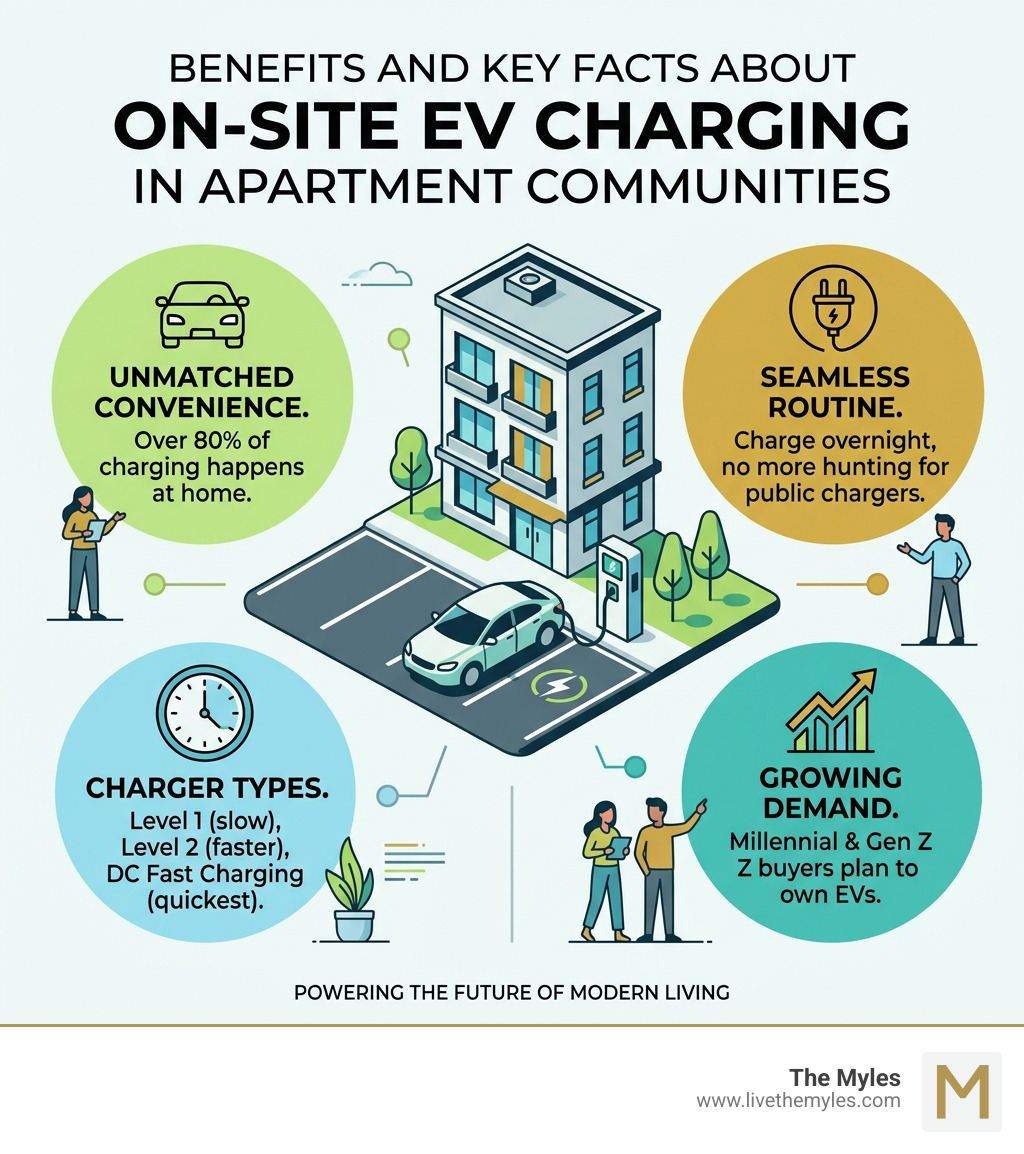
- What it is: On-site EV charging stations installed within an apartment community's parking area, giving residents a convenient place to charge at home
- Why it matters: Around 80% of EV charging happens at home — yet nearly 70% of apartment residents still rely on public charging stations
- Main benefits: Convenience, sustainability, and a seamless daily routine without hunting for a public charger
- Charger types available: Level 1 (slow, 120V), Level 2 (faster, 240V), and DC Fast Charging (quickest option)
- Who's driving demand: Nearly half of millennials and a large share of Gen Z and Gen X consumers plan to buy an EV as their next vehicle
- What to look for: Smart billing systems, dedicated parking, load management technology, and universal compatibility with all major EV brands
The numbers tell a clear story. EV sales in North America are projected to hit 40% by 2030 and exceed 60% by 2035. The demand for on-site charging in residential buildings is only going to grow. For renters who already own — or plan to own — an electric vehicle, finding a home that supports that lifestyle is no longer optional.
This guide walks you through everything: the real benefits of on-site charging, how the technology works, what challenges to expect, and how to find an EV-ready apartment that matches your lifestyle.
The Benefits of Living in Apartments with EV Charging
Living in apartments with EV charging fundamentally changes the ownership experience of an electric vehicle. For most drivers, the primary concern isn't the drive itself—it’s the "where" and "when" of refueling. When we provide charging infrastructure where you live, that anxiety evaporates.

The most significant advantage is the ability to utilize overnight charging. Instead of spending an hour at a public station or planning your weekend around a fast-charger location, you simply plug in when you get home and wake up to a "full tank." Statistics from the U.S. Department of Energy confirm that 80% of charging an electric vehicle happens in a home setting, largely because of the time we naturally spend at home.
Beyond personal convenience, there is a profound environmental impact. By choosing a home with on-site charging, we support a lifestyle that reduces air pollution and greenhouse gas emissions. This shift away from fossil fuel dependence improves public health and contributes to the overall sustainability of our urban centers.
Cost Efficiency of Apartments with EV Charging
One of the most compelling reasons to seek out apartments with EV charging is the dramatic difference in price compared to public infrastructure. Research shows that charging on the public network is 2-3 times more expensive than charging at home. In some scenarios, utilizing specific domestic energy tariffs can make home charging 8 to 10 times more cost-effective than public alternatives.
By charging at home, we can also take advantage of off-peak hours. Many energy grids experience lower demand late at night, and smart charging stations can be programmed to draw power during these windows, maximizing energy efficiency.
Enhanced Resident Experience
For us, apartments with EV charging represent more than just a utility; they are a premium amenity that integrates seamlessly into a modern lifestyle. Having a dedicated spot to charge fosters resident loyalty and creates a "game-changer" level of convenience.
When a building offers on-site charging, it often comes with dedicated parking spaces reserved specifically for EV owners. This ensures you aren't fighting for a spot near a plug. It turns a chore—refueling—into a background task that happens while you sleep, eat, or relax.
Understanding Charging Levels and Infrastructure
Not all charging stations are created equal. When we look at apartments with EV charging, it is important to understand the hardware being used.
- Level 1 Charging (120V): This is the most basic form of charging, often using a standard three-pin wall outlet. It is the slowest method, typically providing 3 to 5 miles of range per hour. While it is the least expensive to install, it is often insufficient for daily commuters.
- Level 2 Charging (240V): This is the industry standard for residential complexes. These stations offer charging speeds typically ranging from 3.6kW to 7kW, which is up to three times faster than a standard plug. A Level 2 charger can easily top up most EVs overnight.
- DC Fast Charging: These are the quickest options, capable of charging an EV to 80% in as little as 30 minutes. While highly convenient, they are significantly more expensive to install and maintain, making them rarer in residential settings compared to Level 2 units.
To ensure long-term reliability, hardware should meet high weatherproof standards and hardware durability ratings, especially in desert climates where heat and dust are factors.
Smart Technology and Load Management
Modern apartment complexes utilize sophisticated software to manage their electrical footprint. Power sharing and dynamic load management (DLM) are essential technologies that allow multiple vehicles to charge simultaneously without overloading the building’s power grid.
Cloud-based dashboards allow property managers to monitor usage in real-time, while software integrations ensure that residents have a smooth experience. Access control is typically handled via RFID cards or smartphone apps, which manage both security and billing. This ensures that you only pay for the energy you actually use.
Safety and Compatibility for Apartments with EV Charging
Safety is a top priority for indoor and outdoor charging stations. Quality installations include:
- Overcurrent protection: To prevent electrical surges.
- Ground Fault Circuit Interrupter (GFCI) protection: To prevent shocks.
- Regular inspections: Conducted by qualified electricians to ensure the hardware remains in peak condition.
Compatibility is rarely an issue today. Most residential stations utilize the OCPP (Open Charge Point Protocol), which allows for interoperability between different hardware and software brands. Whether you drive a luxury sedan or a compact electric SUV, these chargers are designed to be universally compatible with all major plug-in brands.
Overcoming Challenges and Requesting Installation
Despite the clear benefits, some residents still face the challenge of limited availability. Almost 70% of flat and apartment residents currently rely on public stations because their buildings lack infrastructure. If your current building doesn't offer charging, there are steps we can take.
Property managers may hesitate due to the perceived cost of electrical upgrades. However, there are significant incentives available. In many regions, government grants and infrastructure funding can significantly reduce the cost of installation. For example, some programs can reduce the cost of a charger and installation by hundreds of dollars.
If you are a renter, you can use this survey to collect data from your fellow residents. Presenting a property manager with clear evidence of demand—along with information on available grants—is often the catalyst needed to begin an installation project.
Navigating Rules and Restrictions
When living in apartments with EV charging, it is important to understand the community rules. These may include:
- Parking Policies: Some spots may be "charging only" with time limits to ensure all residents have access.
- Usage Fees: While some buildings include charging in the rent, others use app-based billing to charge per kWh or per hour.
- Shared Space Etiquette: A common rule is to move your vehicle once it has reached a full charge to make room for the next neighbor.
How to Find Your Next EV-Ready Home
Finding apartments with EV charging requires a targeted search strategy. As EV adoption grows, newer luxury developments are more likely to include these stations as a standard feature.
When searching for your next home, keep these tips in mind:
- Use Specific Filters: Major rental platforms now allow you to filter results specifically for "EV Charging."
- Look for New Construction: Buildings opening in the next few years are almost certainly being built with EV infrastructure in mind.
- Inquire Early: If a building is under construction, contact them to see if they offer assigned charging or community charging stations. You can connect with an expert to evaluate needs and learn more about what a property offers.
Evaluating Modern Amenities in Apartments with EV Charging
A home that supports electric vehicles is often a home that embraces other modern technologies. When touring properties, look for a holistic approach to luxury and convenience. This includes smart home tech like keyless entry and smart thermostats, as well as lifestyle amenities like luxury pools, fitness studios, and concierge services.
In a city like Las Vegas, proximity to the Arts District and vibrant community spaces adds another layer of value to your living experience. A building that invests in EV chargers is usually a building that cares about the future and the quality of life of its residents.
Frequently Asked Questions
What is the difference between Level 1 and Level 2 charging in apartments?
Level 1 uses a standard 120V outlet and is the slowest, while Level 2 uses 240V, offering significantly faster charging speeds suitable for overnight use. Most modern apartments with EV charging prioritize Level 2 stations because they can fully charge a vehicle in 4 to 8 hours, whereas Level 1 can take over 20 hours for a full charge.
Can I request an EV charger installation from my landlord?
Yes, residents can use surveys and formal request templates to demonstrate demand, and many regions offer grants to help property managers cover installation costs. Many property managers are actually looking for reasons to upgrade their buildings to stay competitive, and resident requests provide the necessary "proof of concept."
Are apartment EV chargers compatible with all vehicle models?
Most apartment complexes install universal Level 2 chargers that are compatible with all major plug-in vehicle brands, though some may require a specific adapter (such as the J1772 to Tesla adapter). Because of the OCPP protocol, the software and hardware are designed to work together regardless of the vehicle's manufacturer.
Conclusion
The transition to electric mobility is well underway, and our homes must evolve to keep pace. Choosing apartments with EV charging is about more than just finding a place to park; it is about future-proofing your lifestyle and embracing a more sustainable, convenient way of living.
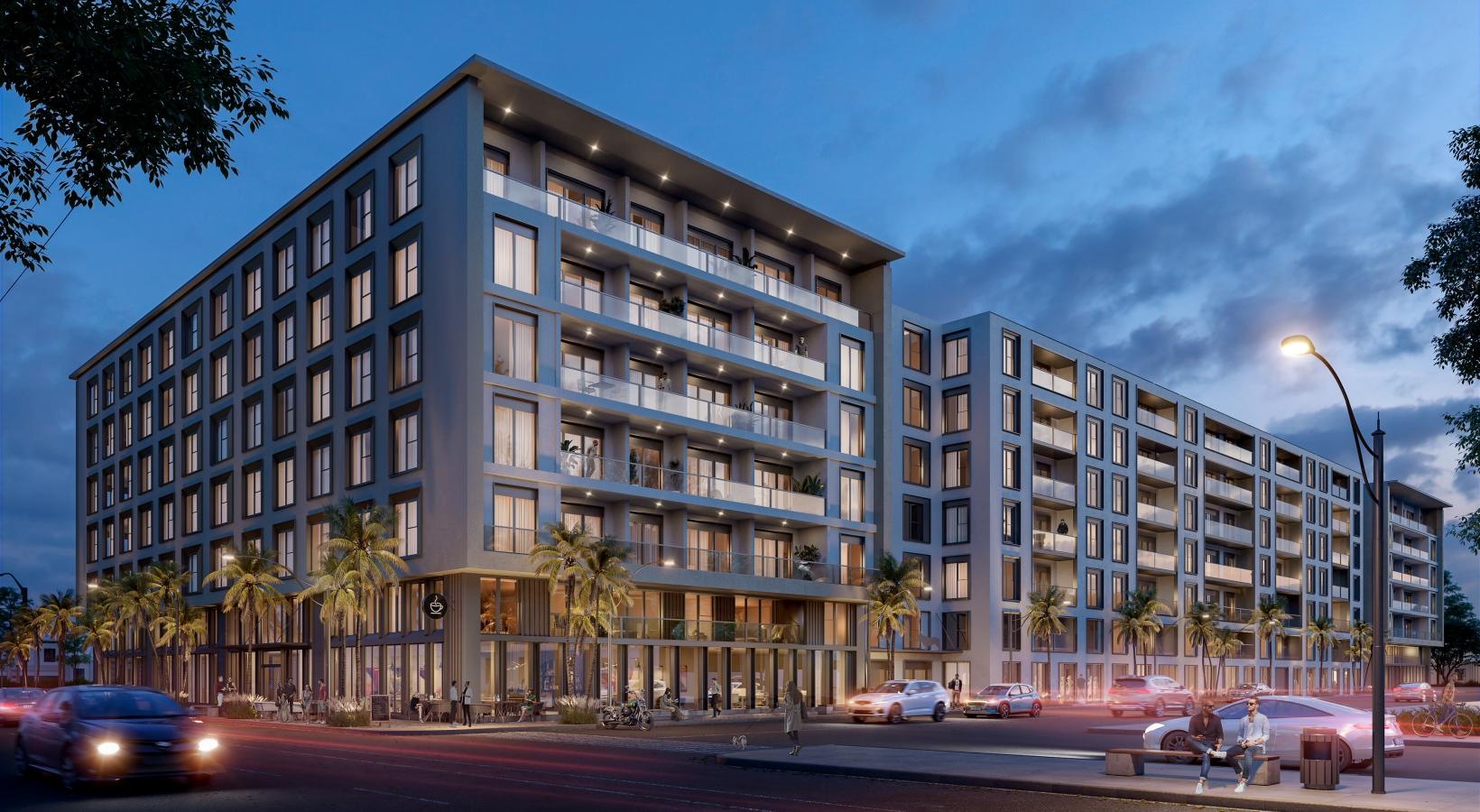
At The Myles, we understand that modern luxury means providing the infrastructure that supports your "Electric Dreams." Opening in 2026, our 311 luxury apartments in Las Vegas are designed to offer an expansive living experience with premium amenities that pay tribute to the vibrant Las Vegas Arts District.
Experience modern luxury at The Myles and discover a community that is ready for the future of transportation.